


 Barbecue Season 2026 Wagyu Sale | Premium Wagyu Beef Discounts – Wagyu Europe

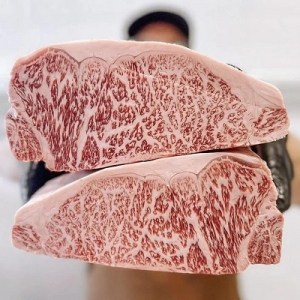
How Much Does Wagyu Cost in Europe?
Wagyu beef prices in Europe depend on origin, grade, cut and pack size. Current WagyuBeef.eu examples include Australian Wagyu ribeye at €99/kg, Japanese A5 Miyazaki sirloin at €198.75/kg on promotion, and Japanese A5 Kobe ribeye at €810/kg. These prices refer to the specific 1 kg packs linked below, not to every product in each category.
This guide breaks down current Wagyu prices across Europe by category, explains what you're actually paying for, and helps you pick the right Wagyu for your budget and occasion.
Quick Answer: Wagyu Prices in Europe (2026)
| Wagyu Type / Cut | Current Example (per kg) | Best For |
|---|---|---|
| Australian Wagyu BMS 4-5 — fillet | €112.50 (list |
Steak dinners, special occasions |
| Australian Wagyu BMS 5-6 — ribeye | €99.00 | Larger steak portions, BBQ |
| Japanese A5 Miyazaki — sirloin | €198.75 (list |
Tasting dinners, gift purchases |
| Japanese A5 Miyazaki / Kagoshima — ribeye | €202.50 (list |
Regional A5 tastings |
| Japanese A5 Kobe — ribeye | €810.00 | Luxury tasting occasions |
| Japanese A5 Matsusaka / Olive Wagyu | Check a current product quotation; no verified price here | Comparing other regional or branded Wagyu |
Prices and delivery: Product examples were checked on ; they are our catalogue prices, not European retail averages. Offers and availability can change. Check the shipping charge for your address at checkout. Free shipping is available on orders over €350, subject to destination and shipping conditions.
Why Is Wagyu So Expensive?
Wagyu can cost substantially more than standard beef because of four key factors:
1. Genetics and breeding. Wagyu breeding and production programmes influence marbling and cost. Japanese origin, breeding background and meat-quality grade are different pieces of information. Fullblood, purebred and crossbred Wagyu should be described accurately rather than inferred from price alone.
2. Feeding time. Feeding programmes, rearing time and animal care contribute to Wagyu production costs. The details vary by breed, farm and production system, so one fixed slaughter age does not describe all Japanese or Australian Wagyu.
3. Grading and quality. Japan's A5 grade combines yield grade A with meat-quality grade 5. Quality is assessed using marbling, meat colour and brightness, firmness and texture, and fat colour and quality. Japanese BMS 8–12 meets the marbling requirement for grade 5; the other quality criteria must also meet grade 5. See the Japan Meat Grading Association standard.
4. Import costs to Europe. International transport, import procedures, cold storage and distribution add to the final price. The amount varies by shipment and supplier; there is no single verified import-cost surcharge per kilogram that applies to every Wagyu product.
Japanese A5 Wagyu Prices in Europe by Region
Japan has multiple Wagyu-producing regions. The table below keeps ribeye as the comparison cut and uses current WagyuBeef.eu 1 kg product prices where verified. For other regional names, check a specific supplier, cut and pack before comparing prices.
Japanese A5 Wagyu Price Comparison (Ribeye, per kg)
| Region | Current Ribeye Price / kg | Tasting Comparison | Key Feature |
|---|---|---|---|
| Kobe (Hyogo) | €810.00 | Individual product and preparation matter | Kobe A5 ribeye; 1 kg pack |
| Matsusaka (Mie) | No current product quotation verified | Compare the specific product | Ask for origin, cut, grade and pack |
| Miyazaki (Kyushu) | €202.50 (list |
Rich A5 tasting option | Miyazaki A5 ribeye; 1 kg pack |
| Hida (Gifu) | €290.00 | Compare alongside other A5 ribeye | Hida A5 ribeye; 1 kg pack |
| Kagoshima (Kyushu) | €202.50 (list |
Rich A5 tasting option | Kagoshima A5 ribeye; 1 kg pack |
| Ohmi (Shiga) | No current product quotation verified | Compare the specific product | Ask for origin, cut, grade and pack |
Important note: Linked prices refer to the stated ribeye products and include current promotions where shown. They are not an average for all EU retailers. For Japanese beef, ask about the cattle identification number linked to the lot and verify origin separately from meat-quality grading.
Which Japanese A5 Region Is Best Value?
For first-time A5 buyers, Miyazaki or Kagoshima can offer a lower pack price than Kobe ribeye. Our current 1 kg Miyazaki and Kagoshima ribeye examples are each €202.50 on promotion, reduced from €270, compared with €810 for Kobe ribeye. This comparison applies to these specific products and offers.
For Wagyu enthusiasts building a regional tasting, pairing Hida with Miyazaki lets you compare the individual products. Use similar cuts, portion sizes and cooking methods; flavour also depends on the animal, feed, cut and preparation.
Australian Wagyu Prices in Europe
Australian Wagyu is produced from cattle with Wagyu breeding backgrounds and is raised and graded in Australia. The Australian AUS-MEAT marbling scale is separate from Japan's BMS system. Fullblood, purebred and crossbred describe breeding, while a marbling score describes visible intramuscular fat. See the Australian Wagyu Association grading guide.
Australian Wagyu Price Comparison by BMS Grade
| BMS Grade | Description | Current Product Example |
|---|---|---|
| BMS 2-3 | Lighter marbling | Check the selected producer and cut |
| BMS 4-5 | Moderate marbling | Fillet example: €112.50 (list |
| BMS 5-6 / 6-7 | More marbling within the same system | BMS 5-6 ribeye example: €99.00/kg; check BMS 6-7 separately |
| BMS 8-9 | Very abundant marbling | Check the selected producer and cut |
Australian Wagyu vs Japanese A5: Is It Worth the Price Difference?
Both are Wagyu, but they're different experiences:
Australian Wagyu offers visible marbling and a rich steak experience. Our Australian BMS 5-6 ribeye is €99 for a 1 kg pack; Australian BMS 4-5 fillet is currently €112.50 for 1 kg, reduced from €150. Compare the same cut as well as the marbling grade when judging value.
Japanese A5 uses a different grading system from Australian Wagyu. Japanese BMS and Australian marbling scores are not interchangeable. A5 is particularly suited to smaller tasting portions; compare the origin, grading system, cut and individual product rather than converting one score directly into another.
Rule of thumb: If this is your first Wagyu experience, start with Australian BMS 5-6. If you already know Wagyu and want the full "melts in your mouth" experience, go Japanese A5. For BBQs and larger portions, Australian; for tasting experiences and special occasions, Japanese.
European Wagyu Prices
Europe also produces Wagyu through specialised farms, including producers in Germany, Spain, Denmark and the Netherlands. Compare each farm's breeding information, grading, cut, pack size and price rather than assuming European origin always means a higher or lower price.
European Wagyu prices (ribeye/kg): Check current prices for a named producer and a defined pack. This guide does not present a verified Europe-wide price range for European-raised Wagyu.
European Wagyu origins and a separate Spanish beef alternative:
- German Wagyu (Bavaria, North Rhine-Westphalia)
- Spanish Wagyu (various artisan producers)
- Rubia Gallega beef (Spain) — a separate Spanish cattle breed and beef alternative, not Wagyu
- Danish Wagyu (smaller producers)
European Wagyu can be another option for buyers comparing producers and supply chains. Origin alone does not establish freshness or environmental performance; check production details, whether the beef is chilled or frozen, and how it reaches you.
Wagyu Price by Cut: What You Pay for Each Part
Different cuts from the same Wagyu animal command different prices. The first three rows below use current Japanese A5 Miyazaki 1 kg packs. For the remaining cuts, confirm region, grade and pack before requesting a price; Australian and Japanese products should not be mixed into one price comparison.
Japanese A5 Wagyu Price by Cut (per kg)
| Cut | Current Miyazaki Example / kg | Best Preparation |
|---|---|---|
| Ribeye (rib roast) | €202.50 (list |
Pan-seared, grilled, steaks |
| Sirloin (striploin) | €198.75 (list |
Pan-seared steaks |
| Fillet (tenderloin) | €232.50 (list |
Steaks, small tasting portions |
| Brisket | Confirm origin, grade, pack and current quotation | Slow-cooked, smoked, stew |
| Chuck Roll | Confirm origin, grade, pack and current quotation | Slow-cooked, ground for burgers |
| Skirt / Flank | Confirm origin, grade, pack and current quotation | Grilled, sliced across the grain |
| Striploin (whole) | Confirm whole-cut weight and current quotation | Roasting whole, slicing to order |
Why Premium Cuts Cost More
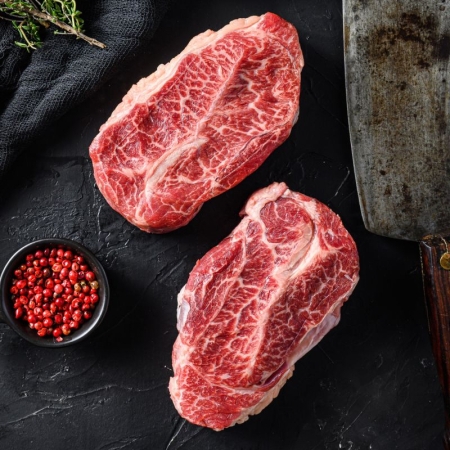
The "premium" cuts — ribeye, sirloin, fillet — come from limited areas of the animal and are sought after for tenderness and steak preparation. Supply, trimming and demand help explain their price; tenderness and marbling also vary between cuts.
Secondary cuts like brisket, chuck or skirt have different muscle structure and cooking requirements. Some suit slow-cooking or smoking; others work well with fast cooking and careful slicing. A lower price does not by itself indicate lower Wagyu authenticity.
Budget tip: For large gatherings, compare Wagyu chuck or brisket with ribeye, taking account of cooking time, trimming and usable portions. Check the specific product price rather than assuming every secondary cut costs a fixed fraction of ribeye.
How Much Wagyu Should You Order per Person?
Wagyu is richer than standard beef — smaller portions may suit a tasting menu. Use these illustrative portion guidelines and adjust for appetite, side dishes and the number of courses. Serving weights are not necessarily the pack sizes available to buy.
Wagyu Portion Size Guide
| Wagyu Type | Main Course Portion | Tasting Portion |
|---|---|---|
| Japanese A5 (ribeye/sirloin) | 80–100g per person | 50–70g per person |
| Japanese A5 (fillet) | 100–120g per person | 60–80g per person |
| Australian Wagyu BMS 6-9 | 120–150g per person | 80–100g per person |
| Australian Wagyu BMS 2-5 | 150–200g per person | 100–120g per person |
| European Wagyu | 150–180g per person | 100g per person |
Cost Per Person Examples (Main Course)
| Wagyu Choice | Price/kg | Portion | Cost per Person |
|---|---|---|---|
| Japanese A5 Miyazaki Ribeye | €202.50 (promotion) | 90 g | €18.23 |
| Japanese A5 Kobe Ribeye | €810.00 | 80 g | €64.80 |
| Australian Wagyu BMS 5-6 Ribeye | €99.00 | 130 g | €12.87 |
| Australian Wagyu BMS 4-5 Fillet | €112.50 (promotion) | 150 g | €16.88 |
| European Wagyu Ribeye — illustrative calculation | €130.00 assumed price | 150 g | €19.50 |
Cost example: A 90 g portion of Miyazaki ribeye at the current €202.50/kg promotional price costs approximately €18.23 in meat. These calculations exclude shipping, sides and cooking losses; the linked product is sold as a 1 kg pack. The European Wagyu row is a calculation example using an assumed €130/kg, not a current product quotation.
What to Look for When Buying Wagyu in Europe
Not all "Wagyu" labeled products are equal. Here's how to verify you're getting authentic quality:
1. Origin, Grading and Traceability
For Japanese A5: Check the stated grade and origin, and ask for the 10-digit cattle identification number associated with the batch. Use it to look up the animal's history in Japan's official NLBC cattle traceability system. Traceability and meat-quality grading are separate checks.
For Australian Wagyu: Check the producer, origin, stated breeding background and declared marbling score. A missing marbling score does not prove that beef is crossbred or inauthentic. Fullblood, purebred and crossbred are breeding categories, not marbling grades.
For European Wagyu: Check the farm name and breed purity. European producers should be transparent about crossbreeding percentages.
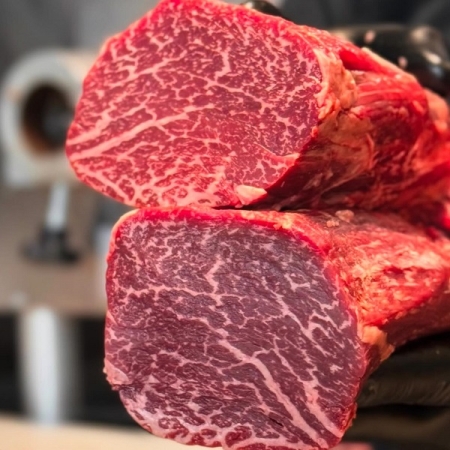
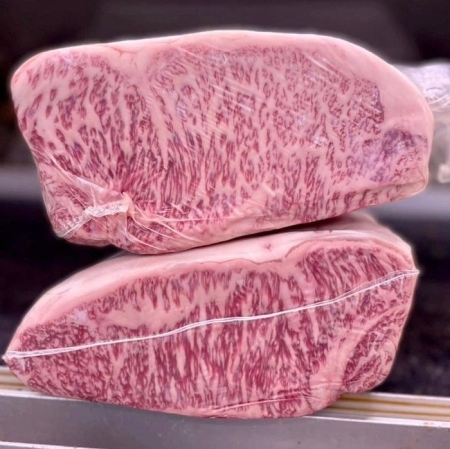
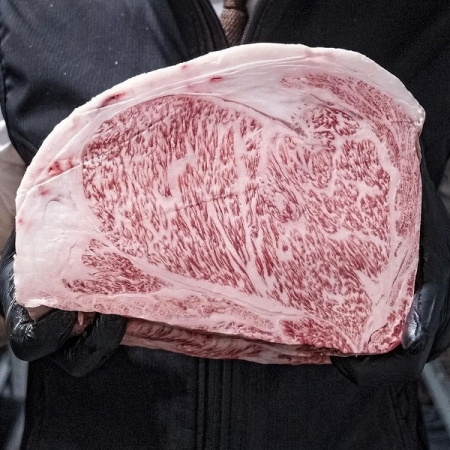
2. Marbling Visible in Photos
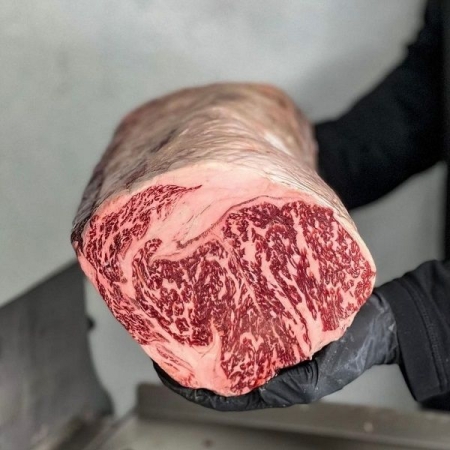
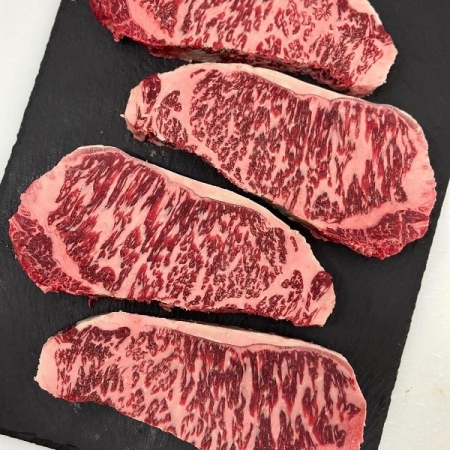
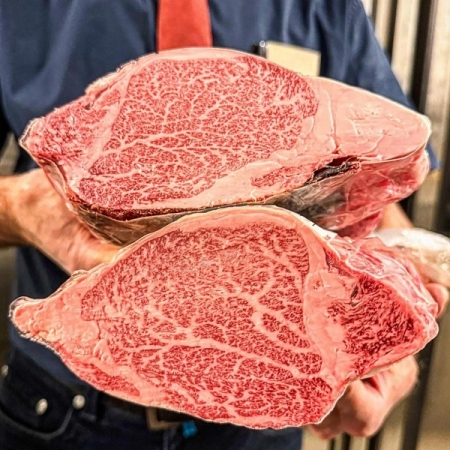
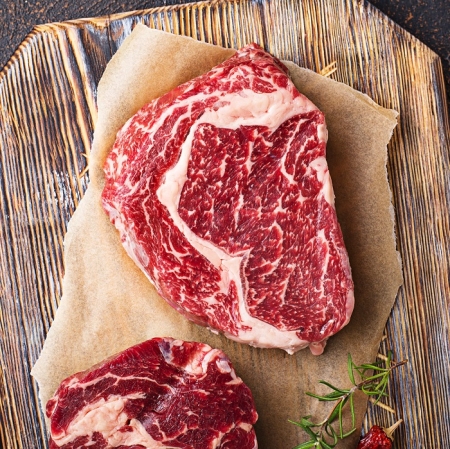
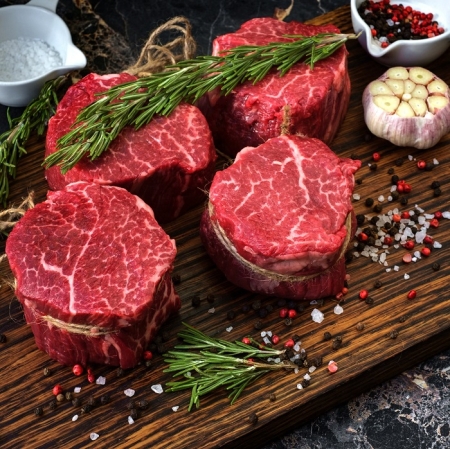
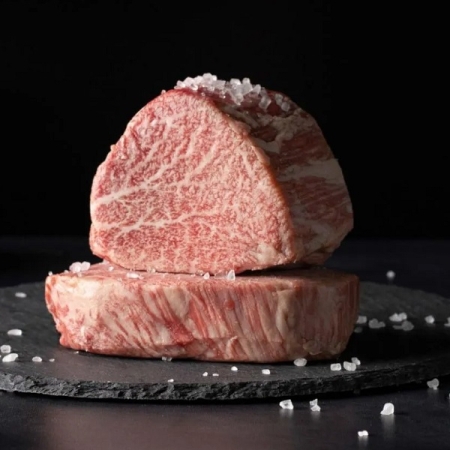
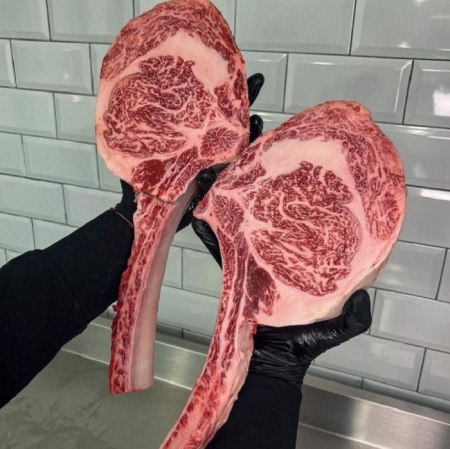
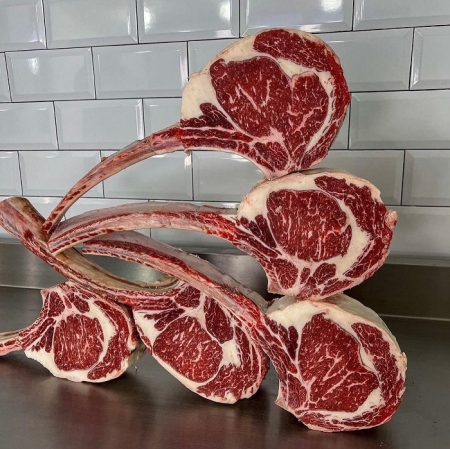
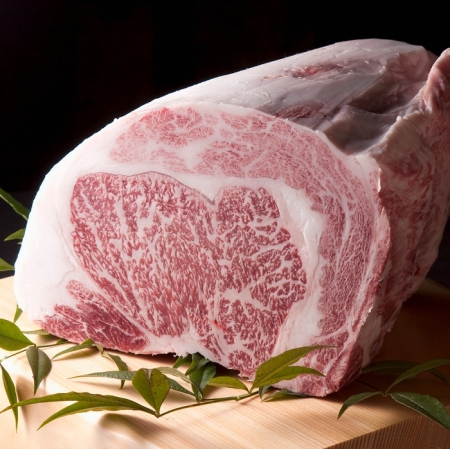
Marbling visible in product photos can help you compare cuts, but appearance alone cannot establish breed, origin or grade. Look for clear product specifications and lot traceability alongside representative photos.
3. Price Red Flags
A surprisingly low price is a reason to check the cut, pack weight, origin, grade and offer terms. It is not proof that a product is inauthentic. Our current Miyazaki sirloin promotion is €198.75 for 1 kg, so a blanket claim that authentic Japanese A5 always starts at €250/kg would be misleading.
4. Delivery and Cold Chain
Wagyu is delicate. Look for retailers who:
- State whether the beef is shipped chilled or frozen and which carrier is used
- Explain dispatch days and estimated transit times for your destination
- Use temperature-controlled packaging with dry ice or gel packs
- Provide tracking
On arrival, check the packaging and product condition and follow the storage instructions on the label. If the shipment appears warm or the packaging is compromised, contact the seller promptly. Transit time alone is not enough to judge whether the cold chain was maintained.
Where to Buy Authentic Wagyu Online in Europe
Specialised online retailers offer Wagyu for home cooking as well as professional kitchens.
WagyuBeef.eu specialises in Japanese A5 (Hida, Miyazaki, Kagoshima, Kobe) and Australian Wagyu, shipped frozen and vacuum-packed in insulated packaging via DHL Express. Most EU deliveries take 24–48 hours after dispatch, depending on destination and route. Orders usually dispatch Monday–Wednesday; Thursday–Sunday orders usually dispatch the following Monday. Browse our Japanese A5 collection or Australian Wagyu range.
When comparing EU Wagyu retailers, check the product origin, stated grade, lot traceability, pack weight and delivery conditions.
Wagyu Price Europe: Frequently Asked Questions
What is the cheapest authentic Wagyu in Europe?
The lowest price depends on the retailer, cut, pack and current offers. Australian Wagyu can be a more affordable starting point than Japanese A5. Our current Australian BMS 5-6 ribeye example is €99 for 1 kg; it is an example from our range, not a claim to be Europe's cheapest Wagyu.
How much does Kobe beef cost in Europe?
Our Japanese A5 Kobe ribeye is €810 for a 1 kg pack, equivalent to €810/kg, checked on 19 September 2026. Other Kobe cuts and pack sizes have their own prices. Check the product's stated Kobe origin and traceability rather than treating every A5 product as Kobe.
Is Wagyu cheaper in Japan than in Europe?
Buying at origin may avoid some international distribution costs, but there is no fixed percentage saving that applies to every product. Compare the same origin, grade, cut, pack size and retail basis, allowing for taxes, exchange rates and delivery costs.
How much Wagyu do I need for a dinner of 6 people?
For a main course, plan 500–600g of Japanese A5 or 800g–1kg of Australian Wagyu ribeye. For a full tasting menu with Wagyu as one of multiple courses, 300–400g total is sufficient. Wagyu is rich; most guests don't want large portions.
Can I buy Wagyu online and have it delivered fresh?
Retailers may offer chilled or frozen Wagyu. WagyuBeef.eu ships frozen, vacuum-packed beef in insulated packaging. Most EU deliveries take 24–48 hours after dispatch, depending on route and destination. Check the shipping policy and the selected product before ordering.
What's the difference between BMS 6-7 and BMS 8-9 Wagyu?
Within the same grading system, BMS 8-9 indicates more marbling than BMS 6-7. Japanese and Australian scores use different systems and should not be treated as equivalent. The price difference also depends on the cut, producer, pack and current offer; there is no fixed percentage premium.
Is European Wagyu as good as Japanese Wagyu?
Quality depends on the producer, breeding, feeding, cut, grading and handling. European origin alone does not guarantee greater freshness or lower environmental impact, and it is not the same designation as Japanese A5. Compare the specific products and choose the eating experience and portion size you prefer.
Should I buy Wagyu frozen or fresh?
Both chilled and properly handled frozen Wagyu can suit different needs. WagyuBeef.eu ships frozen. Follow the product label, use-by date and storage instructions; thaw under refrigeration. Storage time depends on the product and its condition, so a single fixed number of days does not apply to every pack.
Conclusion: Picking the Right Wagyu for Your Budget
Choose by cut, portion size and current offer. These current WagyuBeef.eu examples refer to specific 1 kg packs:
- €99/kg — Australian Wagyu BMS 5-6 ribeye for steak dinners and BBQs
- €112.50/kg, reduced from €150 — Australian Wagyu BMS 4-5 fillet
- €198.75–€232.50/kg during selected promotions — Miyazaki sirloin, Miyazaki or Kagoshima ribeye, and Miyazaki fillet
- €290/kg — Japanese A5 Hida ribeye for a regional tasting comparison
- €810/kg — Japanese A5 Kobe ribeye for a luxury tasting
Whatever your budget, prioritise clear origin and grading information, lot traceability, transparent cold-chain delivery and reputable retailers. Price and photographs are useful comparisons, but they cannot establish authenticity on their own.
Ready to taste the difference? Explore our current Japanese A5 selection and current Wagyu offers. Check delivery conditions for your destination.
Prices and factual details updated: 19 September 2026. Linked prices are selected WagyuBeef.eu examples, including promotions where stated; they are not verified EU retail averages. For current pricing and availability, see our product pages.


Post comment